Coinbase’s Third-Party Data Incident Shows How Little Information Scammers Need
Exposed customer details can become the starting point for convincing impersonation attacks, even when account credentials and funds remain untouched.
AbuseOne Intelligence
4 min read
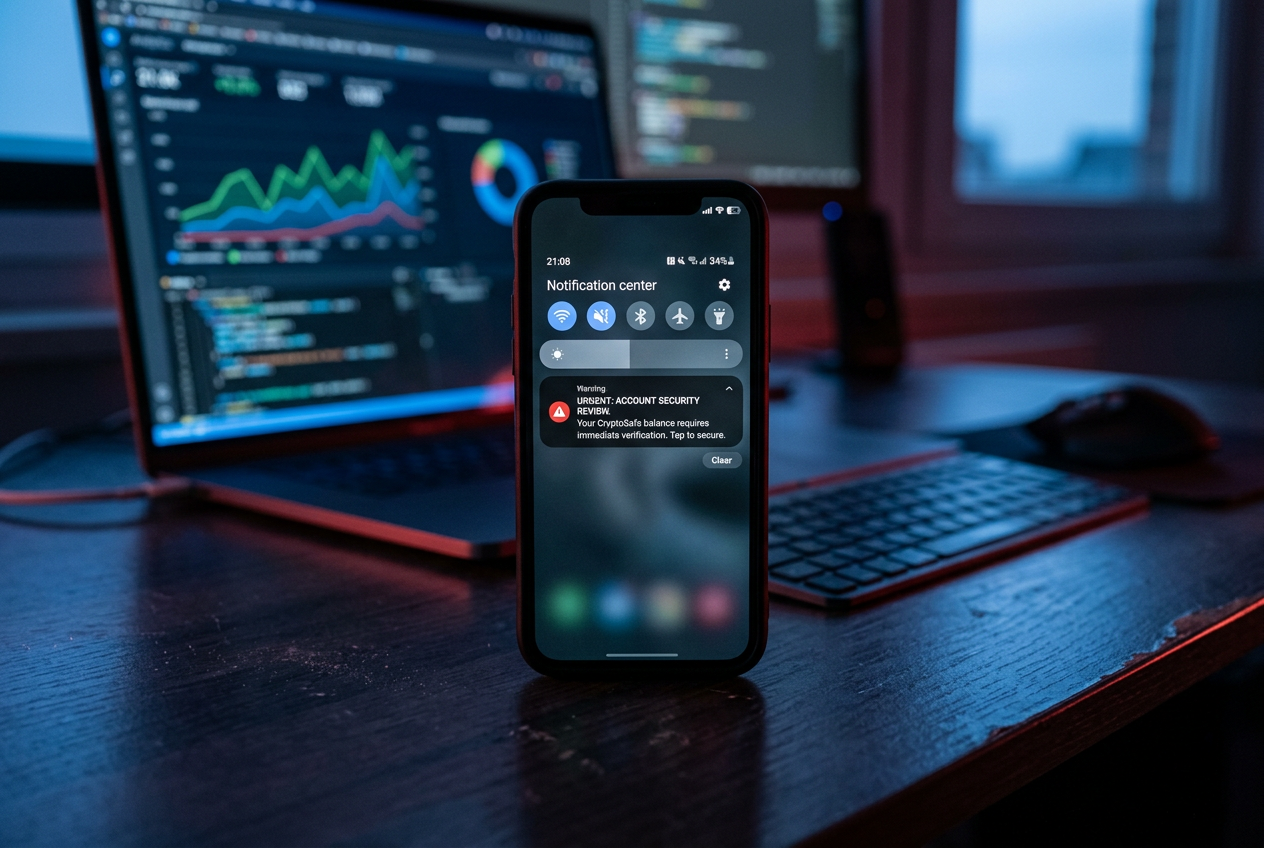
Exposed customer details can become the starting point for convincing impersonation attacks, even when account credentials and funds remain untouched.
A scammer does not always need a password to target a financial account. Sometimes, a name, an email address and a small amount of transaction-related information are enough to make a fraudulent message sound credible.
That is the risk highlighted by a security incident involving Coinbase and Amplitude, a third-party analytics provider.
Coinbase has confirmed that a security incident at Amplitude affected a small subset of its customers’ contact data. The exchange says it found no evidence of unauthorised access to its own systems and that customer funds were not affected. The exact number of affected Coinbase customers has not been publicly confirmed. Source: CoinDesk (opens in a new tab)
The incident is a reminder that the risks surrounding online fraud do not end with the systems a company directly controls.
The danger is what happens next
Contact information may appear relatively harmless compared with passwords, authentication codes or private keys. But its value changes when it can be connected to a financial service and information about a customer’s activity.
An attacker who knows that someone uses a particular exchange can construct a message around a supposed account restriction, suspicious transaction or urgent security review.
If the message contains details that appear consistent with the customer’s activity, it can feel legitimate. The recipient may be more inclined to trust the sender, respond to a phone call or follow instructions without independently verifying the request.
This is how a data exposure can become a starting point for targeted phishing and social engineering.
The incident does not establish that Coinbase customers have already been targeted using the exposed information. It illustrates a plausible risk that organisations and affected customers should take seriously.
A legitimate-looking message is not proof of legitimacy
The most effective impersonation attempts are not necessarily the most technically sophisticated.
They exploit the gap between what a victim knows and what the attacker appears to know.
A convincing message might reference a genuine service, use the correct branding and arrive at a moment when the recipient is already concerned about their account. A caller might claim to be investigating an incident and use familiar terminology to establish credibility.
The objective is to move the conversation away from independent verification and towards compliance with the attacker’s instructions.
In financial fraud, that may mean revealing a one-time authentication code, approving an unauthorised action or transferring assets to a wallet controlled by the criminal.
The critical point is that knowing something about a customer does not prove that the person contacting them is authorised to act on behalf of their financial provider.
The third-party risk organisations cannot ignore
The Coinbase incident also highlights a broader challenge for companies that rely on external providers to process, analyse or store customer information.
A company may maintain effective controls over its own infrastructure while information held by a supplier is exposed through a separate incident.
That creates questions extending beyond whether the primary platform was compromised.
- What customer information is shared with external providers?
- Is every field necessary for the service being delivered?
- How long is that information retained?
- Who can access it, and how is that access monitored?
- Could the exposed information be combined with publicly available data to identify and target individual customers?
These questions matter because the consequences of an incident depend not only on how much data is exposed, but also on how useful that data becomes when combined with other information.
Reducing unnecessary data collection and access can limit the material available to criminals in the first place.
What customers should do
Customers who receive a notification about exposed information should remain alert to unsolicited emails, calls and text messages claiming to offer urgent assistance.
A few precautions can make a meaningful difference:
- Verify independently. Open the official application or enter the service’s known website address yourself instead of following a link in an unexpected message.
- Never share authentication secrets. Legitimate support staff should not ask for passwords, private keys, seed phrases or two-factor authentication codes.
- Treat transfer instructions as a major warning sign. Do not move funds because a caller or message claims it is necessary to secure your account.
- Secure your account. Use strong, unique credentials and phishing-resistant multifactor authentication where available.
- Report suspicious contact. Use the provider’s official support channels, particularly if a message references personal or transaction-related details.
These precautions are useful even when there is no evidence that an account itself has been compromised.
The real lesson: follow the information, not just the breach
The Coinbase-Amplitude incident illustrates why investigations into online abuse need to look beyond the initial point of exposure.
The important questions include what information became accessible, how it could be connected to particular individuals, and whether it could support a credible impersonation attempt.
Those connections are often where the next stage of a fraud becomes visible.
A data incident and a financial scam are not the same event. But exposed information can provide the raw material for the latter, particularly when criminals can combine it with other sources to make their approach more convincing.
For organisations, the challenge is to understand the potential consequences of exposed data before it is used against customers.
For investigators, it is to identify the patterns, relationships and activity that connect an initial exposure to subsequent attempts at fraud.
**The question is not only whether an attacker gained access to a system. It is what that access makes possible afterwards.**
Sources and attribution
Editorial disclosure: This article is an independent commentary on publicly reported developments. AbuseOne does not imply an affiliation with, endorsement by or partnership with Coinbase or Amplitude.
About AbuseOne
AbuseOne investigates online fraud, digital scams and online abuse, using OSINT and digital investigation techniques to help identify patterns and connections behind suspicious activity.
- Phishing
- Impersonation
- Third-party risk
- Data exposure
- Crypto fraud
- Social engineering
- Fraud intelligence